

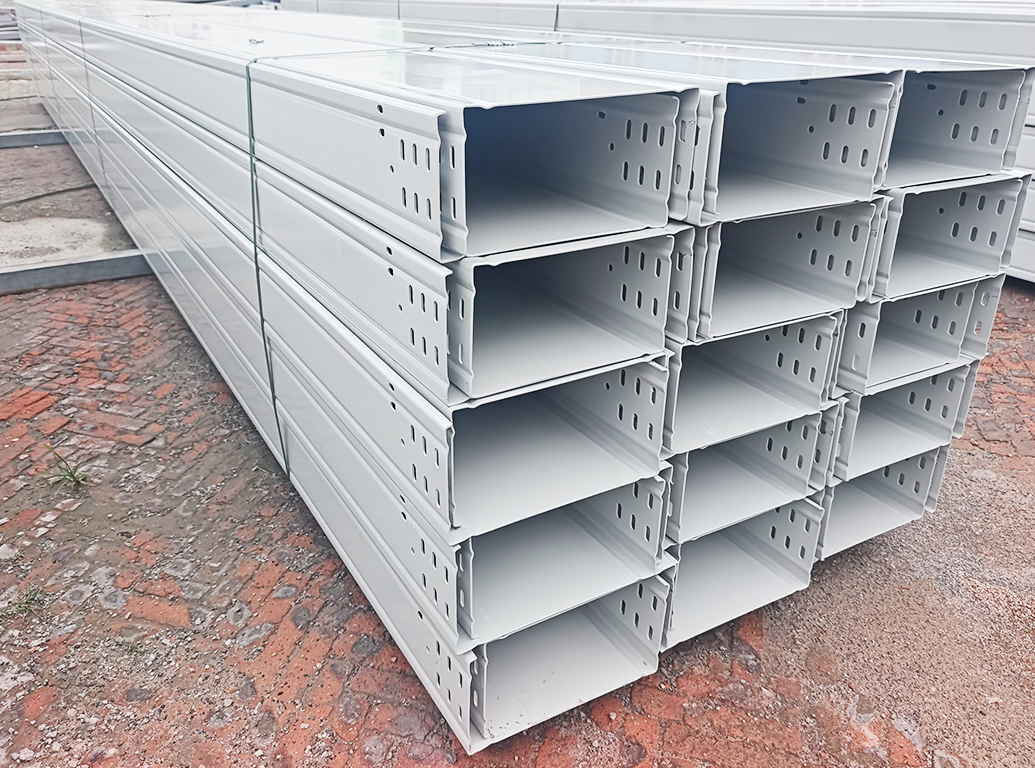
Fireproof cable trays are an essential part of modern electrical infrastructure, especially in projects where safety,
reliability, and compliance are critical. In industrial facilities, commercial buildings, transportation hubs,
data centers, power plants, tunnels, and public utility systems, cable management is not only about organization
but also about protection. A well-designed fireproof cable tray system helps support, route, and shield electrical
cables while improving the overall fire resistance of the installation. For builders, contractors, engineers, and
procurement teams, understanding the structural characteristics and applications of fireproof cable trays is vital
when selecting the right cable support solution for demanding environments.
This article provides a detailed, SEO-friendly overview of fireproof cable trays, including their definition,
structure, materials, protective performance, key advantages, common specifications, selection considerations, and
typical applications. The content is written in pure English and designed for use in blogs, directory pages,
product category pages, and industry information pages. It focuses on general industry knowledge only and does not
recommend any specific company. If you are looking for general knowledge about fireproof cable trays, this guide
will help you understand how these systems work, why they matter, and where they are commonly used.
A fireproof cable tray is a type of cable support system designed to carry and organize electrical cables while
providing enhanced resistance to heat, flame, and fire-related damage. Unlike Standard cable trays, a fireproof
cable tray is manufactured with materials, coatings, or structural designs that improve its ability to maintain
performance during fire exposure. The goal is to slow the spread of fire, protect cables from direct flame
contact, and extend the time available for emergency systems to continue operating.
Fireproof cable tray systems are widely used in environments where power continuity and safety are essential.
These systems may be installed for power cables, control cables, communication cables, instrumentation cables, and
emergency circuits. In many projects, the fireproof cable tray serves as part of a broader fire protection strategy,
working alongside fire-resistant cables, fire barriers, firestopping materials, and alarm systems.
In practical terms, the term “fireproof” is often used in the industry to describe a tray with improved fire
resistance. Depending on the construction and standards applied, this may include coatings that resist flame,
insulation layers, enclosed or semi-enclosed tray structures, and materials that maintain structural integrity
under high temperatures.
The importance of fireproof cable trays has increased with the growth of large-scale electrical systems and the
rising focus on fire safety in construction. Modern buildings and facilities rely heavily on cables for lighting,
communications, automation, security, monitoring, and emergency response. If a fire occurs, damaged cable supports
can accelerate the spread of flames, cause cable failure, and lead to system shutdowns.
Fireproof cable trays help reduce these risks by improving cable support performance in hazardous conditions.
Their benefits include improved fire resistance, reduced smoke spread in some configurations, better cable
protection, and more stable support for critical systems. In certain locations, they can help meet regulatory
requirements and fire safety design goals.
For high-value or high-risk installations, selecting a fireproof cable tray is not just a technical preference; it
is a practical safety decision. The right tray can contribute to safer evacuation, protect critical operations, and
reduce property damage during fire incidents.
Fireproof cable trays are available in multiple structural forms, but most products share several common design
features. These characteristics determine the tray’s strength, heat resistance, corrosion resistance, installation
flexibility, and fire performance.
| Structural Feature | Function | Typical Benefit |
|---|---|---|
| Base Tray Body | Main load-bearing structure that supports cables | Provides stability and cable capacity |
| Fire-Resistant Coating | Protective layer applied to metal surface | Improves flame resistance and delays heat transfer |
| Insulating Layer | Extra layer that reduces heat conduction | Helps maintain tray integrity during fire exposure |
| Perforated or Solid Bottom | Controls airflow, drainage, and cable support style | Balances ventilation and protection |
| Cover or Lid | Encloses cables and tray opening | Protects cables from dust, debris, and flames |
| Side Rails | Edges that guide and secure cable placement | Increases mechanical strength and safety |
| Support Brackets | Mounting accessories that fix tray to wall, ceiling, or frame | Ensures secure installation |
| Joints and Connectors | Components that connect tray sections | Allows modular and flexible installation |
The load-bearing structure is the foundation of any fireproof cable tray. It must support the weight of cables,
accessories, and external loads without bending or deforming. In fireproof designs, the structure is often
reinforced to maintain mechanical stability during elevated temperatures. Strong load-bearing performance is
especially important in long-span applications, industrial corridors, and overhead cable routes.
One of the main structural characteristics of a fireproof cable tray is the use of a fire-resistant surface
treatment. This may include epoxy fireproof coating, powder coating with fire-retardant additives, galvanizing plus
protective layers, or other engineered finishes. The surface treatment helps slow flame spread and protect the
underlying metal from direct heat exposure.
Fireproof cable trays are commonly manufactured from steel, galvanized steel, stainless steel, aluminum alloys, or
other metal substrates. Steel is widely used due to its strength and cost efficiency, while stainless steel offers
enhanced corrosion resistance. Aluminum may be selected when lightweight construction is required. The choice of
base material influences fire performance, durability, installation method, and environmental resistance.
Many fireproof cable tray systems use an enclosed or semi-enclosed structural form. A covered design can provide
better protection from sparks, heat, falling debris, and direct flame. In addition, enclosed trays may help preserve
cable integrity by limiting exposure to oxygen and external contaminants. This design is often preferred for
emergency systems and high-risk zones.
Fireproof cable trays are typically designed for modular installation. Straight sections, bends, reducers, tees,
crosses, risers, and connectors allow the system to adapt to different building layouts. This modular structure
improves installation efficiency and makes it easier to expand the cable network later.
Material selection is one of the most important factors in fireproof cable tray performance. The table below
summarizes common materials and their typical characteristics.
| Material | Main Characteristics | Typical Use |
|---|---|---|
| Carbon Steel | High strength, cost-effective, easy to fabricate | General industrial and commercial installations |
| Galvanized Steel | Improved corrosion resistance with zinc coating | Indoor and moderate outdoor environments |
| Stainless Steel | Excellent corrosion resistance and long service life | Coastal, chemical, and humid environments |
| Aluminum Alloy | Lightweight, easy to handle, corrosion resistant | Projects requiring reduced weight |
| Fireproof Coated Steel | Steel base with fire-resistant surface protection | Fire-sensitive areas and critical circuits |
| Composite Structure | Multiple layers combined for heat and flame resistance | Specialized fire protection applications |
Fireproof cable trays offer several advantages over ordinary cable support systems. These benefits are important
not only for safety but also for long-term operational efficiency.
The most obvious advantage is improved resistance to fire and heat. Fireproof cable trays are designed to reduce
the risk of rapid flame spread and maintain support for cables longer under emergency conditions. This can be
crucial for emergency lighting, fire alarm systems, communication lines, and power supply routes.
In many facilities, not all cables are equally important. Some cables support critical functions such as emergency
response, monitoring, shutdown controls, and data transmission. A fireproof cable tray helps protect these cables
by shielding them from direct flame, impact, and heat damage.
By preserving the structural support and reducing damage during fire exposure, fireproof cable trays can help keep
essential systems operational longer. In industries where downtime is costly or dangerous, this reliability is a
major advantage.
Fireproof cable trays are not only protective but also practical. They keep cables organized, separated, and easier
to inspect. Better cable management reduces installation confusion, improves maintenance, and supports future
modifications.
Many fireproof cable trays are designed to handle substantial cable loads. Their metal construction and reinforced
design make them suitable for large cable bundles, heavy-duty industrial wiring, and complex infrastructure
projects.
When properly selected and installed, fireproof cable trays can offer a long service life. Corrosion-resistant
coatings, durable metal substrates, and quality fabrication all contribute to extended durability.
Fireproof cable trays are used across a wide range of industries and project types. Their applications continue to
expand as safety requirements become more demanding.
| Application Area | Why Fireproof Cable Trays Are Used | Example Cables Supported |
|---|---|---|
| Commercial Buildings | Protect electrical and communication systems in public spaces | Lighting, alarm, control, and data cables |
| Industrial Facilities | Support heavy cable loads and improve fire safety | Power, instrumentation, automation cables |
| Data Centers | Maintain reliable cable routing and reduce fire risk | Network, server, and backup power cables |
| Power Plants | Protect critical control and transmission circuits | Control, relay, and power cables |
| Rail Transit and Stations | Improve fire protection in transport infrastructure | Signal, lighting, and communication cables |
| Tunnels | Reduce fire spread risk in enclosed environments | Emergency lighting, ventilation, and control cables |
| Airports | Support safety-critical systems with higher protection | Security, communication, and electrical cables |
| Hospitals | Help maintain essential systems during emergencies | Medical equipment, alarm, and backup power cables |
In office towers, shopping centers, hotels, and mixed-use developments, fireproof cable trays are often used for
vertical risers, utility shafts, and emergency systems. These buildings contain many cables for lighting, HVAC,
fire alarms, elevators, and IT networks. A fireproof tray supports these systems and improves overall fire safety
planning.
Industrial plants often have harsh operating conditions, dense cable networks, and high electrical loads. Fireproof
cable trays are ideal for areas with control rooms, production lines, and process systems where cable failure can
stop operations. They are also useful where flammable materials or heat sources are present.
Data centers require stable, well-organized cable infrastructure. Fireproof cable trays help protect essential
communication and power pathways while supporting continuous operation. In environments where uptime is critical,
fire-resistant cable support is a major design priority.
In substations, power generation facilities, and utility corridors, fireproof cable trays help support important
control and distribution cables. These systems often need to remain operational during emergencies, making fire
resistance especially valuable.
Rail lines, tunnels, airports, and transit stations all depend on reliable cable systems. Fireproof cable trays are
used to route power, communications, lighting, signaling, and monitoring cables in ways that improve safety and
system resilience.
Fireproof cable trays come in different sizes, thicknesses, surface treatments, and configurations. The following
table provides a general overview of common specifications used in the industry. Actual dimensions may vary by
project, standard, and manufacturer.
| Specification Item | Common Range | Description |
|---|---|---|
| Width | 50 mm to 1000 mm | Determines cable capacity and route size |
| Height | 50 mm to 200 mm | Affects tray strength and cable containment |
| Thickness | 0.8 mm to 3.0 mm | Influences load-bearing ability and durability |
| Length | 2000 mm to 3000 mm | Standard section length for installation |
| Surface Finish | Hot-dip galvanized, electro-galvanized, powder coated, fireproof coated | Provides corrosion and fire protection |
| Tray Type | Solid bottom, perforated, ladder, enclosed, covered | Different styles for different cable and safety needs |
| Load Capacity | Varies by design and span | Depends on material, thickness, and support spacing |
| Fire Resistance Level | Project-specific | Defined by test standard or system requirement |
| Installation Method | Wall-mounted, ceiling-suspended, floor-supported, rack-mounted | Chosen according to site layout |
There are several types of fireproof cable trays available, each suited to different installation requirements.
This type features a continuous bottom surface that provides maximum cable support and better protection from dust,
debris, and heat. It is often used where cable shielding is more important than ventilation.
A perforated tray includes holes or slots in the bottom or sides. This design allows for some ventilation and heat
dissipation while maintaining strong support. It is commonly used in commercial and industrial applications.
Ladder trays have side rails with cross members and are suitable for heavier cable loads. They offer good strength
and easy cable access, making them useful for large electrical systems.
An enclosed design provides a covered structure for maximum cable protection. This type is often selected for
sensitive circuits, fire-prone environments, and safety-critical routes.
Choosing the right fireproof cable tray requires careful evaluation of the project environment, cable type, load
requirement, and fire performance goals. The following factors should be considered.
Proper installation is essential to achieve the expected fireproof performance. Even a High-quality cable tray can
fail to perform well if it is installed incorrectly. Some important installation considerations include correct
support spacing, secure fastening, accurate alignment, proper grounding, and suitable joint connection methods.
Support spacing should match the tray load and manufacturer guidelines. Overly long spans can reduce stability and
increase stress on the tray. In addition, fireproof coatings and protective layers should remain undamaged during
installation. Cutting, drilling, and welding should be handled carefully to avoid compromising the protective
surface.
Cable segregation may also be important. In some projects, power cables, signal cables, and emergency circuits must
be separated to reduce interference and improve safety. Covers, partitions, and dedicated tray routes can help
achieve this goal.
Fireproof cable trays should be inspected periodically to ensure long-term performance. Regular maintenance may
include checking for corrosion, loose fasteners, damaged coatings, structural deformation, and cable overcrowding.
Cleaning the tray and keeping it free of dust or debris can also help maintain system reliability.
In high-demand environments, maintenance teams should verify that support brackets remain secure and that cable
loads have not exceeded the original design conditions. Any signs of wear or damage should be addressed promptly.
Preventive maintenance is especially important in critical infrastructure where cable failure could interrupt
essential services.
The fireproof cable tray industry continues to evolve with advances in materials, coatings, and engineering design.
One major trend is the use of improved fire-resistant coatings that provide better protection without adding
excessive weight. Another trend is the demand for modular systems that simplify installation and allow easier
expansion.
There is also increasing interest in sustainable manufacturing, corrosion-resistant solutions, and cable support
systems designed for smart buildings and digital infrastructure. As safety regulations become stricter, fireproof
cable trays are expected to play an even greater role in both new construction and retrofit projects.
The main purpose is to support cables while improving resistance to fire, heat, and flame spread. It helps protect
critical wiring and maintain system stability during emergencies.
No. Fireproof cable trays are support structures, while fireproof cables are specially designed cables with
improved resistance to heat and fire. They are often used together in safety-critical systems.
The best material depends on the environment and application. Steel is common for strength, stainless steel is
preferred for corrosion resistance, and galvanized steel offers a balanced option for many projects.
Yes, but outdoor use requires suitable corrosion-resistant materials and finishes. Environmental conditions such as
moisture, UV exposure, and salt air should be considered carefully.
They require regular inspection and basic maintenance to ensure that coatings, joints, supports, and cable loading
remain in good condition over time.
Fireproof cable trays are a crucial component of modern cable management and fire safety strategy. Their structural
characteristics, including strong load-bearing design, fire-resistant coatings, modular connections, and protective
tray forms, make them suitable for demanding environments where safety and reliability are essential. From
commercial buildings and factories to data centers, tunnels, and power facilities, fireproof cable trays provide a
practical way to protect electrical systems and support critical operations.
When selecting a fireproof cable tray, it is important to evaluate the cable type, load requirements, environment,
installation method, and fire protection goals. By understanding the general industry features and application
scenarios described in this article, project planners and technical teams can make more informed decisions for
safer, more reliable cable support systems.
As demand grows for safer and more durable electrical infrastructure, fireproof cable trays will continue to be a
standard choice in projects that require strong fire resistance, dependable cable support, and long-term
performance.
```


Copyright © 2026 Hebei Xinnin Metal Products Co., Ltd
خريطة الموقعيستخدم هذا الموقع ملفات تعريف الارتباط لضمان حصولك على أفضل تجربة على موقعنا.
 English
 Español
 한국어
 ไทย



 هاتف
تعليق
(0)